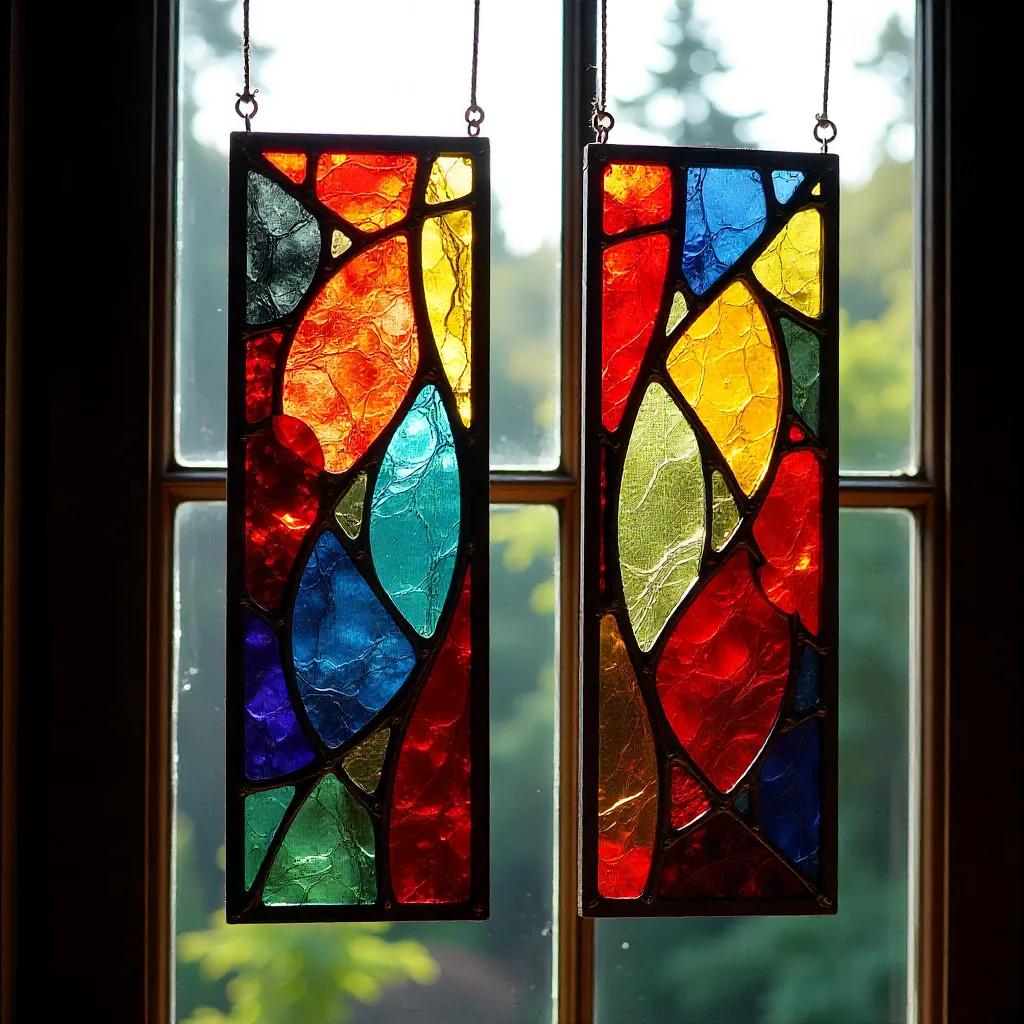
Geometric Precision
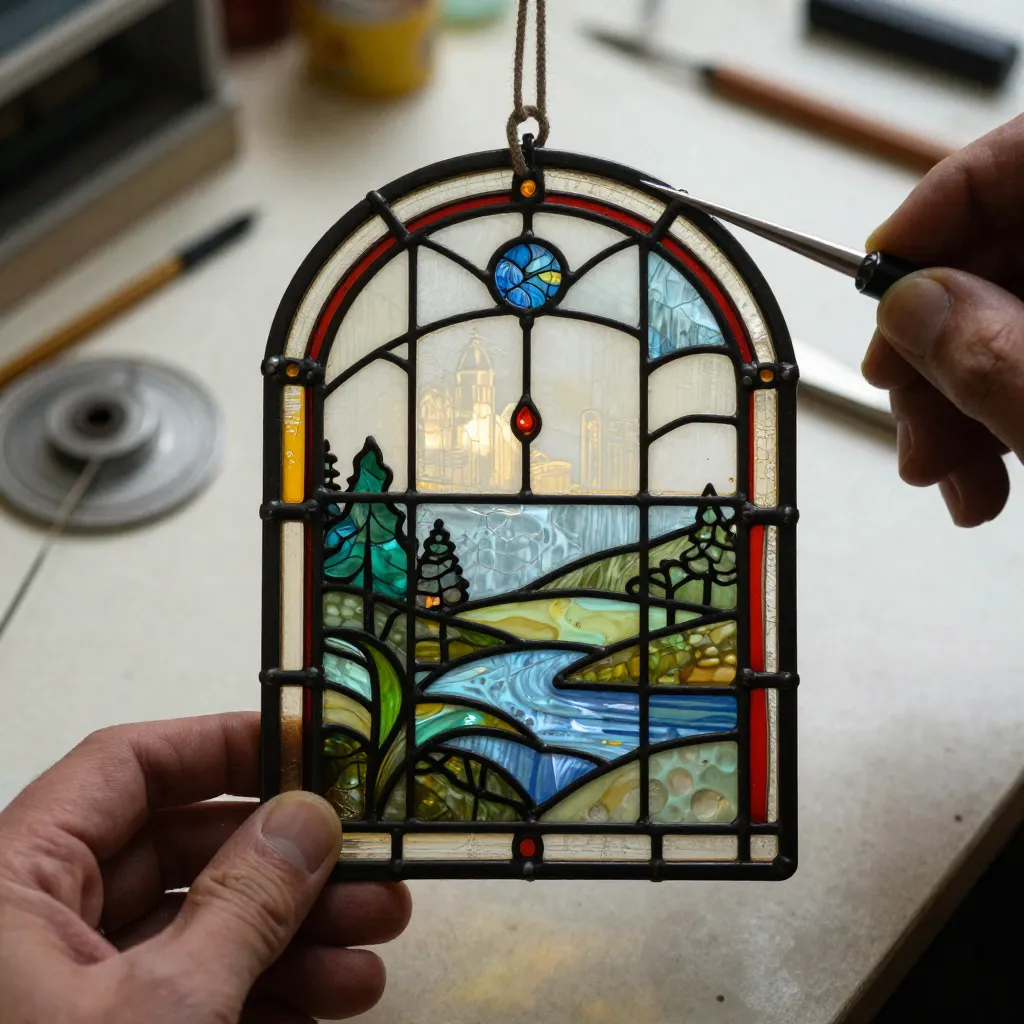
Hand-Cutting Process
Each glass fragment is cut with precision to match the intended design. The cutting process considers both the geometric requirements of the pattern and the natural stress points of the glass material. This attention to detail ensures structural integrity while maintaining aesthetic balance.
Structural Considerations
Stress Point Analysis
During the design phase, potential stress points are identified and addressed. The placement of lead came or copper foil reinforces these areas while contributing to the overall visual rhythm of the piece.
Mathematical Symmetry
Geometric patterns are developed using mathematical principles to ensure visual harmony. These calculations help determine fragment sizes, angles, and placement to create balanced compositions.

Assembly Methodology
Lead Came Technique
Traditional lead came work involves carefully fitting glass pieces into H-channel or U-channel lead strips, creating durable joints while allowing for expansion and contraction.
Copper Foil Method
The copper foil technique wraps each glass edge with thin copper tape before soldering, allowing for more intricate designs and finer detail work.
Finishing Process
Final assembly includes soldering, patination, and sealing to protect the piece and enhance its appearance. Each step is performed with attention to both function and aesthetics.